ADDICTION
I found it useful to make a list of all of my past and present addictions. For each one, I ask myself...
What need/s did this addiction meet in the beginning?
Did it keep meeting that need / those needs?
What need/s am I currently trying to meet by using this addiction?
Is is working? How effective is it?
What harm/damage is it causing?
How will my life play out if I continue indulging in this addiction?
What might the final outcome look like in the end?
Do I know anyone else who has this addiction and who is further along the path with it than me?
(Perhaps someone older?)
If so, what does their life look like?
Additionally, I take a few days to reflect on each addiction's bottom (if I have hit it).
This can reveal a Lifelong Pattern and illuminate if and how both the addiction and its bottom were inevitable consequences of unresolved trauma.
Anatomy of Addiction
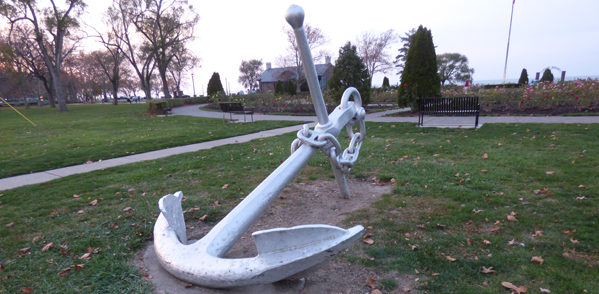
1. Anchor (Past Experience)
2. Activator (Current Experience/Event)
3. Craving
4. Compulsion
5. Consequences
The above are the 5 Stages of Anger, according to William Fleeman in the
Pathways To Peace Anger Management Workbook. (He uses the word "Trigger" for Stage 2.)
I have found these to also be the 5 Stages of any Strong Negative Emotion as well as
the Anatomy of Addiction and the Trauma Cycle or Trauma Loop.
The first two stages are the main focus of this website.
In Stage 1, an experience occured in the past that anchored a reaction in the body.
The reaction can include nervous system changes, physical symptoms,
a strong emotional charge, thoughts, beliefs, actions and more.
In Stage 2, a current event or experience occurs that acts as a stimulus that activates the old stored reaction.
The current (activating) event/experience is similar in way to the past experience (anchor), so it pulls up the same reaction we had to the past experience.
The reaction was appropriate for the past experience (anchor), but not so appropriate for the current event/experience (activator).
Again, the reaction can include nervous system changes, physical symptoms, a strong emotional charge, thoughts, beliefs, actions and more.
While we are activated, we can only see the similarities and we dismiss or overlook any differences.
We are seeing the present situation through the lense of the past trauma.
Once we have processed and resolved what happened in the past, we can clearly see the differences and respond appropriately to the current event.
In Stage 2, if we do not trace the activated reaction back to the anchor and neutralize the anchor, then we will start heading into the next 3 stages.
The 3 C's - Craving, Compulsion, Consequences
Cravings are a sign that we are activated.
I view cravings as a a desire to seek relief from uncomfortable feelings.
It often manifests as a desire for control or escape.
IFS (Internal Family Systems) talks about internal parts of us called Firefighters that come online to protect us from the "flames" of pain.
Firefighters are reactive and impulsive.
They try to get us high above the flames, douse the flames with a substance, or distract us from the pain of the flames.
At the craving stage, the Firefighters are sliding down the pole ready to come to our rescue.
A craving can be nipped in the bud by de-escalating our reaction
and neutralize the underlying anchor (usually past trauma).
The craving might go away on its own if we just wait it out.
Focusing on our breathing - taking slow, deep breaths - can help.
It also might go away on its own if we distract ourselves
by doing something that changes our feeling state.
Getting absorbed in a creative pursuit is a powerful distraction that can
change our feeling state.
Going to a meeting with others, who have dealt with similar cravings, can help.
I have found that the best thing to do, though, is to uncover and neutralize the anchor (past trauma),
because once I have done that, the craving vanishes. Instantly.
If we do nothing about the craving, then we end up in the next stage,
which is Compulsion. We will do something compulsive and impulsive to relieve our discomfort.
(Eat, drink, shop, gamble, rage, try to force someone to understand us, etc.)
The Firefighter will do it's job to get us high above the flames,
douse the flames with a substance, or distract us from the pain of the flames.
And then, there will be Consequences to deal with
(such as a rocky bottom, an emotional hangover,
exhaustion due to being over-adrenalized, or
damage to a job or relationship).
It is important to note that if the trigger is very deep or intense
we might skip Stage 3 (not experience a craving at all),
but instead move instantly into Stage 4 Compulsion without any warning.
A lightning fast reflex takes place below the level of consciousness,
and we have no mental defense against the compulsion. No time to become aware that we are activated or do anything about it.
Even if we do not catch ourselves in time to avoid the Compulsion and Consequences stages, though,
we can still uncover and neutralize the anchor after the fact.
With time and practice, our awareness grows and we get faster at identifying when we are activated
and more adept at interrupting the cycle by neutralizing anchors.
Quitting
For my thoughts on safely quitting an active addiction, click
HERE.